Same-Day Dumpster Rental in Bakersfield, CA | Guide
Need a container today, not next week? Here's what actually goes into a same-day delivery and how to make sure yours goes smoothly.
ReadBakersfield, CA guide
Shingles are heavier than most people expect. Here's how we size a roll-off for a roofing tear-off so you don't overload the container or the truck.
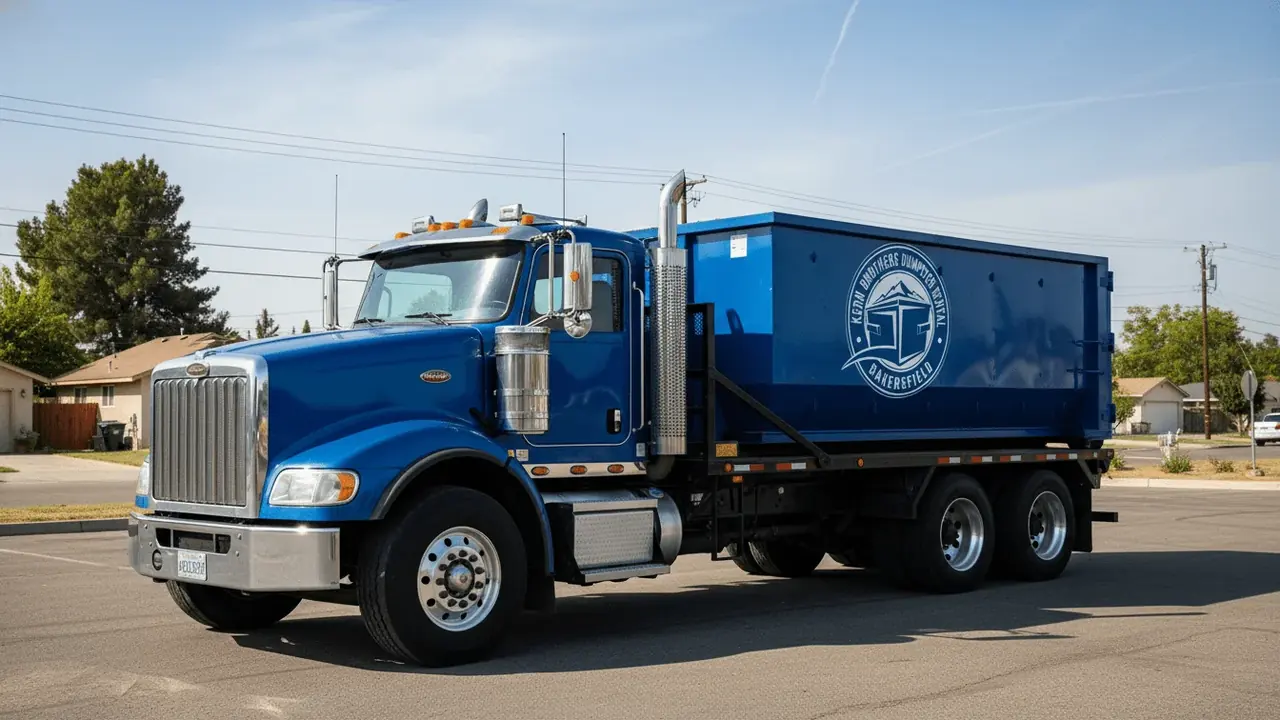
Of all the project types we size dumpsters for, roofing tear-offs are the ones where getting the size wrong actually matters most. Not because the container overflows — most roofs don't produce that much volume — but because shingles are dense, and weight limits catch people off guard more on a roofing job than almost any other project we deliver for.
A roll-off dumpster has two limits: how much volume it can physically hold, and how much weight it's rated to carry. For most household cleanouts or furniture removal, volume is the limiting factor — the container fills up visually long before it gets dangerously heavy. Roofing tear-off debris flips that. A layer of asphalt shingles is heavy per square foot, and a typical tear-off — especially one where a roof has multiple layers of shingles stacked on top of each other from past re-roofing jobs — can hit a container's weight limit while the box still looks half empty.
This is exactly why heavy debris like roofing material, along with concrete, dirt, brick, and tile, is typically restricted to smaller containers — generally 10 or 15 yard sizes — rather than the larger 30 or 40 yard boxes. It's not that a bigger box can't physically hold more shingles; it's that the truck hauling it and the container itself have real weight ratings, and a 30 or 40 yard box loaded to the brim with shingles would exceed them well before it's full.
When you call to book a roofing dumpster, the two things that matter most are the roof's square footage and how many layers of shingles are coming off. A single-layer tear-off on an average residential roof usually fits comfortably in a 10 yard container. Multiple layers, a larger roof footprint, or a tear-off that also includes old underlayment and damaged decking generally pushes toward a 15 yard container.
| Size | Dimensions | Typical roofing scope |
|---|---|---|
| 10 yard | 14' L × 7.5' W × 3.5' H | Single-layer tear-off on an average residential roof |
| 15 yard | 16' L × 7.5' W × 4.5' H | Multi-layer tear-off, larger roof footprint, or tear-off plus some decking replacement |
We generally don't recommend the 20, 30, or 40 yard sizes for shingle-heavy loads specifically because of the weight issue described above — even if the roof is large, it's usually better to plan for an additional pull (a second container swap) on a 10 or 15 yard box than to risk overloading a bigger one. If your job mixes roofing debris with lighter materials — old gutters, wood trim, siding — let us know the mix when you call, since that can shift the math slightly.
A roofing tear-off dumpster typically holds:
What generally shouldn't go in with the roofing debris: paint cans, chemicals, or any electronics that might come off the property during the same project. Keep those separate regardless of what else is in the load.
Roofing tear-offs move fast once they start — a crew stripping a roof generates debris quickly, often by tossing it directly off the roof into a chute or straight down into the container. That means placement needs to be dialed in before the crew starts working, not adjusted mid-job. A driveway placement close to the house, positioned so debris can be thrown directly in without a lot of extra carrying, makes the whole tear-off faster and safer for the crew.
If your driveway can't accommodate the container and it needs to sit in the street, a City of Bakersfield Public Works street permit may be required — worth checking on before the roofing crew shows up, not the morning of.
Bakersfield sits at the south end of the San Joaquin Valley where the southern Sierra Nevada, the Tehachapi Mountains, and the Temblor Range converge — which means roofs across the area deal with real heat exposure and sun-driven shingle degradation over time. Multi-layer tear-offs are common here for exactly that reason: a lot of homes across Northwest, Southwest, and Southeast Bakersfield, along with older housing stock out in Oildale and East Bakersfield, have been re-roofed more than once without a full tear-off in between. If you're not sure how many layers are on your roof, a quick look from the attic or a roofing contractor's assessment before you book will help us get the size right the first time.
Roofing jobs move on tight timelines, and we work around that. Call us with the details above and we'll get you sized correctly and scheduled for a delivery that lines up with when the crew is ready to start tearing off.
Roofing crews plan tear-offs around dry weather windows, and a delayed dumpster delivery can throw off an entire day's schedule for a crew that's already on the clock. We treat roofing deliveries as time-sensitive for exactly this reason — when you book, we confirm a delivery window that lines up with when the crew actually plans to start stripping the roof, not just a general day. If the forecast shifts or the crew's start time moves, call us as early as you can so we can adjust the delivery without leaving a container sitting empty in the driveway for an extra day, or worse, missing the crew's start time entirely.
It's also worth thinking about pickup timing the same way. A finished tear-off with a full container sitting on the property for days afterward isn't a problem exactly, but most homeowners and contractors would rather have it gone as soon as the job wraps. Let us know your expected completion date when you book so we can plan the pickup to follow shortly after, rather than defaulting to the full rental period if you don't need it.
Talk to a real person
Call and describe the job. Flat price, stated tonnage, and a delivery time on the same call.
Mon–Sat 7:00am – 6:00pm
From this guide
Most single-layer residential tear-offs fit in a 10 yard container. Multi-layer tear-offs or larger roofs generally call for a 15 yard container. We typically don't recommend larger sizes for shingle-heavy loads because of weight limits, even though there's technically more room.
Shingles are dense and heavy. Heavy debris like roofing material is typically restricted to 10 or 15 yard containers because the truck and container have real weight ratings that a large volume of shingles can hit well before the box looks full. A bigger container doesn't solve a weight problem.
It's common on larger or multi-layer roofs to need a swap — we pick up a full 10 or 15 yard container and drop an empty one so the crew can keep working. Let us know when you book if you expect the job to run heavy so we can plan for it.
Generally yes, in reasonable amounts — let us know the material mix when you book so we can size the container correctly. Paint, chemicals, and electronics should always be kept separate regardless of what else is in the load.
As close to the house as the driveway allows, positioned so the crew can throw debris directly in during tear-off. If the driveway won't work and the container needs to sit in the street, a City of Bakersfield Public Works street permit may be required.
Keep reading
Need a container today, not next week? Here's what actually goes into a same-day delivery and how to make sure yours goes smoothly.
ReadBoth get junk off your property, but they work very differently. Here's how to decide which one actually fits your project and timeline.
ReadSkip the guesswork. Here are real project types matched to each of our five container sizes, based on jobs we deliver across Kern County every week.
Read